
Realizing

Transform 3D Blockout to Photorealistic Portrait: AI Design Triumph
Explore how advanced AI transformed a basic 3D blockout into a stunning photorealistic portrait using high-resolution image synthesis and 3D-to-2D rendering.
Introduction
In the realm of digital design, the ability to transform simple geometric shapes into lifelike imagery is a testament to the power of AI. This article delves into the remarkable transformation of a basic 3D blockout into a photorealistic portrait, showcasing the capabilities of AI in modern design.
Visual Analysis: Transformation from 3D Blockout to Portrait
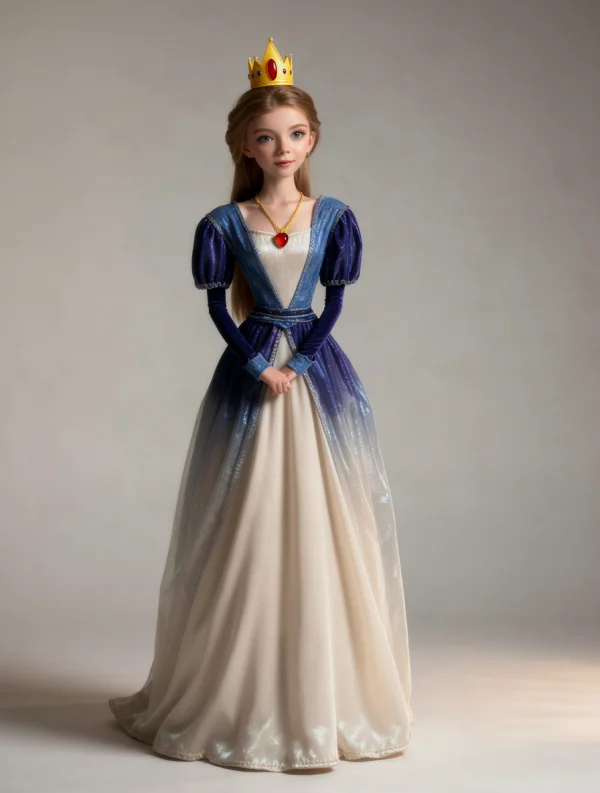
The initial image, a simplistic 3D blockout, serves as a foundational reference. From this basic shape, AI technology has generated a detailed and lifelike portrait. The transformation is striking, with the final output displaying intricate details such as skin texture and hair strands, demonstrating the prowess of AI-enhanced photorealistic rendering.
AI Features Enabling the Result
The core features powering this transformation are the 3D Blockout to Image conversion and High-Resolution Image Synthesis. These technologies enable the AI to interpret simple shapes and transform them into detailed, realistic images with precise control over lighting, shading, and texture.
Technical Insights
The AI employs 3D-to-2D AI Rendering, allowing it to transpose three-dimensional data into a two-dimensional format, while retaining depth and perspective. The use of a 38mm standard lens perspective ensures that the portrait maintains realistic proportions and a natural viewpoint.
Use Cases and Applications
This technology has vast applications, from creating realistic CGI in films to designing virtual models for fashion and advertising. It is also invaluable in architecture and interior design, where transforming sketches into lifelike images can enhance client presentations.
Conclusion
The ability of AI to transform a simple 3D blockout into a photorealistic portrait underscores its potential in revolutionizing digital design. As AI continues to evolve, its applications and impact on design will undoubtedly expand, offering new possibilities and efficiencies.
Input Analysis
The specific input shows a basic 3D blockout, a foundational geometric shape used to outline the structure of the desired output.
Output Analysis
The AI-generated output showcases a detailed and lifelike portrait, with high-quality features such as skin texture and hair detail, demonstrating photorealism.
Key Features
Apr 8, 2026
Ultra HD PNG
Community Member
Love this style?
Use this creation as a foundation to build something entirely new with our AI directing toolkit.
75k+ community users
1. Spatial Structure Conditioning
This creation (#58896) was synthesized in the Draw3D Generative Studio using spatial edge-locking and depth conditioning. Unlike standard text-to-image tools that alter camera angles and proportions at random, Draw3D preserves the underlying 3d blockout geometry while applying realistic surface shaders.
2. Physically Based Lighting & Materials
Our cloud GPU pipeline analyzes the structural contours of the input scene to calculate accurate global illumination, ambient occlusion, soft contact shadows, and physically based material reflections—turning rough concept lines or untextured CAD massings into client-ready presentation visuals in seconds.
3. Remix & Iterate in Studio
Want to adapt this style or lighting setup for your own architectural visualization, industrial design concept, or 3D scene? Click Remix Creation above to load this workflow directly into the Draw3D Workspace, where you can modify regions, adjust camera perspectives, or animate it into a cinematic video.